

AI labs and NIH upheaval point to same question: who guards the research
Tech CEOs want Congress to close bioweapon loopholes in AI, while the White House strips job protections from thousands of NIH officials overseeing federal grants.
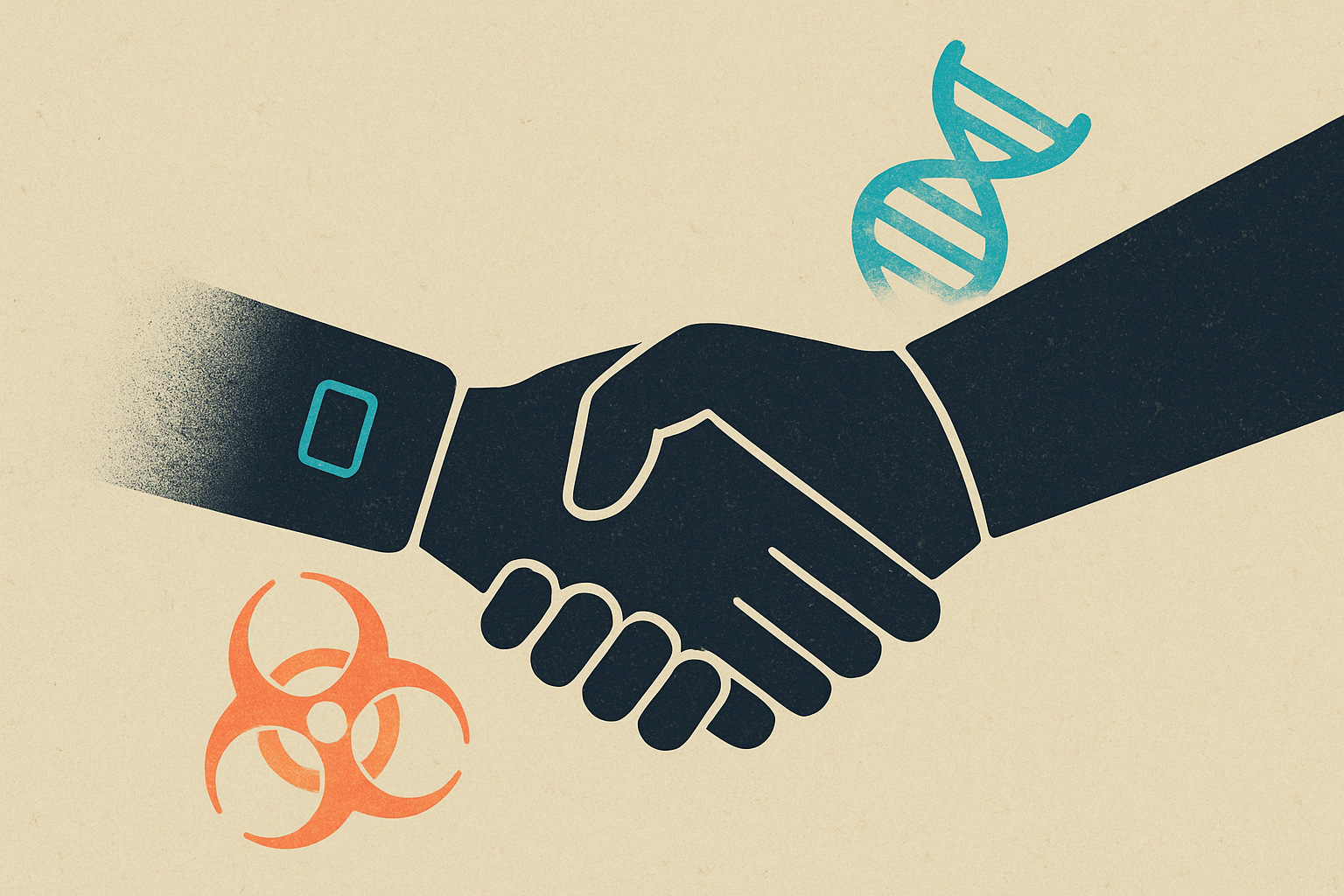
Two stories broke this week that look unrelated but share the same nerve: the infrastructure of scientific oversight is being rewritten in real time, and nobody is sure who ends up holding the keys.
The first came from The Verge, reporting that major AI companies—rivals who rarely agree on anything—sent an open letter to Congress asking for tougher biosecurity rules. The concern is straightforward: their models could help someone design a biological weapon, and the current regulatory framework has gaps large enough to drive a lab notebook through. The letter is notable not because the technology is new but because the companies are admitting, in writing, that they cannot govern this risk alone.
The second story came from STAT, which reported that the Trump administration plans to strip civil service protections from roughly 8,000 positions at the National Institutes of Health. Many of those roles oversee research grants—the same grants that fund university labs, clinical trials, and the kind of basic science that feeds both pharma pipelines and AI training sets. Moving those jobs into at-will employment changes the incentive structure for anyone deciding what gets funded and what gets flagged.
The through line is governance. The AI labs are asking for external rules because internal compliance is expensive and hard to enforce across competitors. The NIH restructuring suggests the opposite: centralizing authority by making oversight staff easier to replace. Both moves change who gets to say no, and on what grounds.
For stewards, the question is not whether these changes are good or bad policy. It is whether the people allocating capital into biotech, AI infrastructure, or research-dependent sectors understand that the referees are being swapped mid-game. Grant timelines, model release schedules, and compliance costs are all downstream of who sits in those chairs and how long they expect to stay there.
Sources · 2
AI leaders call for tougher protections against AI-aided bioweapons
The Verge
STAT+: Trump administration to strip job protections of top NIH officials, grants staff
STAT
Matched signals
Lattice signals Numen pinned to this story at publish time.
Unlock the analytical widgets on every article — signal matches, Trends snapshots, X overlays, agent reasoning — with a Member account.
Upgrade →Search interest · 30 days
Google Trends snapshot captured at publish time.
No Trends signal captured for NIH job protections. Either the term doesn’t generate enough search volume, or the upstream API was unavailable when this article published.
Unlock the analytical widgets on every article — signal matches, Trends snapshots, X overlays, agent reasoning — with a Member account.
Upgrade →On X right now
Top engagement posts about this topic, ranked by likes + retweets + quotes.
Devin Nunes' Cattle Dog 🇺🇦 🇪🇺🇺🇸🇨🇦 @Kaos_Vs_Control
4 eng81dTrump administration to strip job protections of top NIH officials, grants staff https://t.co/ukUxjsESSZ via @statnews
View on X →STAT @statnews
4 eng81dAn Ebola update, Trump to strip job protections of NIH officials, and more health news from Morning Rounds https://t.co/AeRiVt3dgl
View on X →Byul @byul_finance
0 eng81dPresident Trump to remove job protections for NIH officials
View on X →
Unlock the analytical widgets on every article — signal matches, Trends snapshots, X overlays, agent reasoning — with a Member account.
Upgrade →Your read
How did this article land?
Three sliders. Optional comment. Anonymous is fine.
Open to anyone. One response per reader.