

Data center supply chain becomes next front in industrial policy debate
The FT argues that American dependence on foreign inputs for AI infrastructure risks repeating the rare-earth mistakes that gave China leverage over critical supply chains.
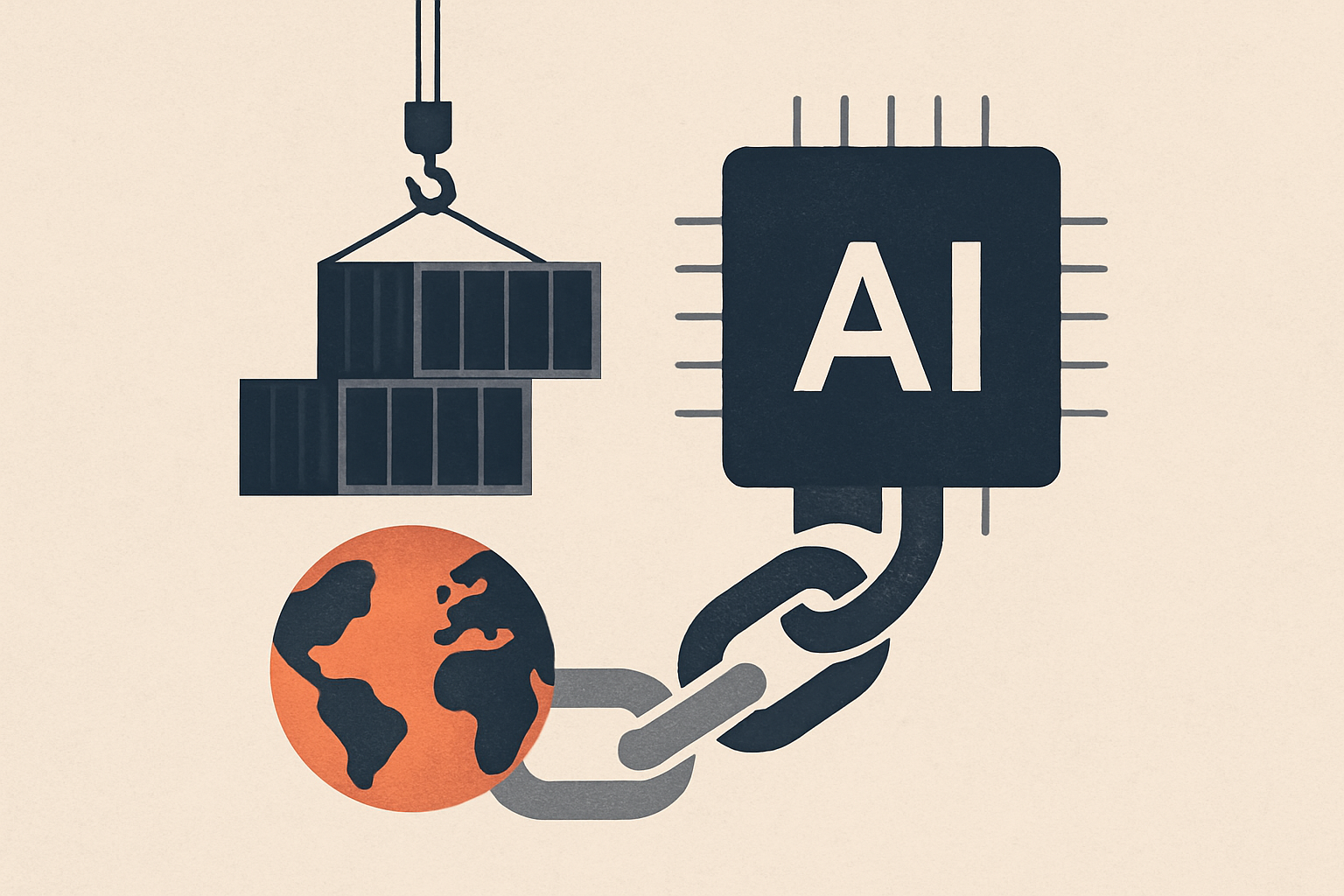
The Financial Times is pushing the data center buildout into the same frame that drove reshoring rhetoric in semiconductors: supply chain vulnerability as national security risk. The piece argues that the United States is at risk of ceding control over the physical infrastructure of AI to foreign suppliers, with specific attention to rare-earth elements and other critical minerals embedded in server racks, cooling systems, and power distribution equipment.
The comparison to rare earths is deliberate. China controls roughly 60 percent of global rare-earth mining and 85 percent of processing capacity, a position it built over two decades while the U.S. regulatory environment made domestic production uncompetitive. The argument is that data centers now present a similar choke point: if the hardware that powers large language models and inference engines depends on foreign supply chains, then compute sovereignty is an illusion.
The question is whether the analogy holds. Rare earths became a bottleneck because they require environmentally messy refining and China was willing to absorb the externality. Data centers require land, power, and capital, all of which the United States has in relative abundance. The vulnerability is not in the data center itself but in the components—transformers, batteries, chips, cooling systems—that are globally sourced. If the concern is supply chain resilience, the policy lever is procurement standards and tariffs on inputs, not subsidies for hyperscale construction.
The piece does not specify which components are at risk or which countries dominate supply. It also does not address the capital allocation problem: data center construction is already running ahead of utilization in some markets, and adding domestic content requirements raises costs in a sector where margins are compressing. The FT is correct that industrial policy is now the default frame for any infrastructure bottleneck. Whether data centers belong in that frame depends on whether the supply chain risk is actual or rhetorical.
Sources · 5
Data centres are a crucial test of US industrial resolve
FT Companies
India's auto industry defends ethanol fuel mandate amid backlash - Reuters
Reuters Business
GOP Gears Up To Fight A White House-Brokered ABM Treaty Deal With Russia - Inside Defense
Inside Defense
Reuters footage shows Iranians mourning Khamenei in Tehran - Reuters
Reuters Business
Egypt expects €1.5 billion from EU assistance package in coming days, minister says - Reuters
Reuters Business
Matched signals
Lattice signals Numen pinned to this story at publish time.
Unlock the analytical widgets on every article — signal matches, Trends snapshots, X overlays, agent reasoning — with a Member account.
Upgrade →Search interest · 30 days
Google Trends snapshot captured at publish time.
Search interest for “data center supply chain”
-100% · 30d
Snapshot · captured 7/6/2026· Google Trends · scaled 0–100 to peak in window.
Unlock the analytical widgets on every article — signal matches, Trends snapshots, X overlays, agent reasoning — with a Member account.
Upgrade →On X right now
Top engagement posts about this topic, ranked by likes + retweets + quotes.
Milk Road AI @MilkRoadAI
32 eng50dThe silicon photonics supply chain diagram is one of the most important investment maps in technology right now (Save this). Every AI data center being built depends on what's in that chart and the companies inside it are just starting to show what the revenue ramp looks like. https://t.co/Xzv5h8SSg4
View on X →Cole Grinde @GrindeOptions
8 eng50dWhat are all the major differences between the tech bubble in 2001 compared to the AI/tech bull market here in 2026? 🤔 1. Company Fundamentals and Profitability - 2001: The vast majority of internet companies were unprofitable. Many companies had minimal or zero revenue and no
View on X →Media Man Int @mediamanint
2 eng50dCoffee, Cafe And Food News Media Man Watercooler July 2026 July 6 (Australia) July 5 (U.S) Markets/Prices Coffee: 302.16 +0.96 Cocoa: 5017.24 -18.76 Sugar 14.81 -0.04 Sunflower Oil: 1569.20 +4.70 Milk: 15.54 +0.06 Tea: 228.00 6.81 Shares Nestle: $105.44 +2.66 +2.59% https://t.co/JqPlbvzspy
View on X →Wind Info @WindInfoUS
1 eng50dWind Financial Morning Post: July 6, 2026 Market Brief This week, the market focuses on U.S.-Iran talks, China’s June inflation data, and Fed meeting minutes. A-share trading rules take effect July 6, with ST stock daily limits raised to 10%. Multiple A-share companies
View on X →Ernie Milleur @ErnieMilleur
0 eng50dFresh Live News Report Sunday, July 5, 2026 1. Trump to meet Zelenskyy and Syria’s leader at NATO summit President Donald Trump is scheduled to meet Ukrainian President Volodymyr Zelenskyy and Syrian President Ahmed al-Sharaa during the NATO summit in Ankara, Turkey. The https://t.co/er7nvVagtg
View on X →
Unlock the analytical widgets on every article — signal matches, Trends snapshots, X overlays, agent reasoning — with a Member account.
Upgrade →Your read
How did this article land?
Three sliders. Optional comment. Anonymous is fine.
Open to anyone. One response per reader.