

Infrastructure bottlenecks stall global tech ambitions
From AI chips to solar panels and automobiles, companies are discovering that ambitious growth plans collide with hard infrastructure realities and supply chain dependencies.
AMD is preparing its next generation of AI infrastructure to challenge Nvidia's dominance, but the rollout highlights how the AI boom runs on increasingly strained semiconductor supply chains. The company's push into data center chips represents not just product competition but a fundamental test of whether the market can support multiple AI infrastructure providers at scale. According to Reuters, AMD's move comes as enterprises seek alternatives to Nvidia's near-monopoly, creating potential bottlenecks in manufacturing capacity and engineering talent.
India's solar manufacturing ambitions reveal similar dependency patterns. The country's aggressive push to build domestic solar capacity has stalled because factories cannot secure enough polysilicon and other components without relying on Chinese suppliers. Reuters reports that Indian solar plants sit idle while manufacturers struggle with the same supply chain dependencies they were designed to eliminate. The infrastructure gap exists not in final assembly but in the upstream materials and processing capabilities that underpin renewable energy production.
The automotive sector shows how infrastructure constraints translate directly to financial performance. Hyundai reported a 21% drop in second-quarter profit, missing forecasts as the company grapples with semiconductor shortages and competitive pressures in key markets. The numbers reflect how modern manufacturing depends on complex, globalized supply chains that can buckle under stress. According to Reuters, Hyundai's struggles echo across the industry, where just-in-time manufacturing meets just-not-enough components.
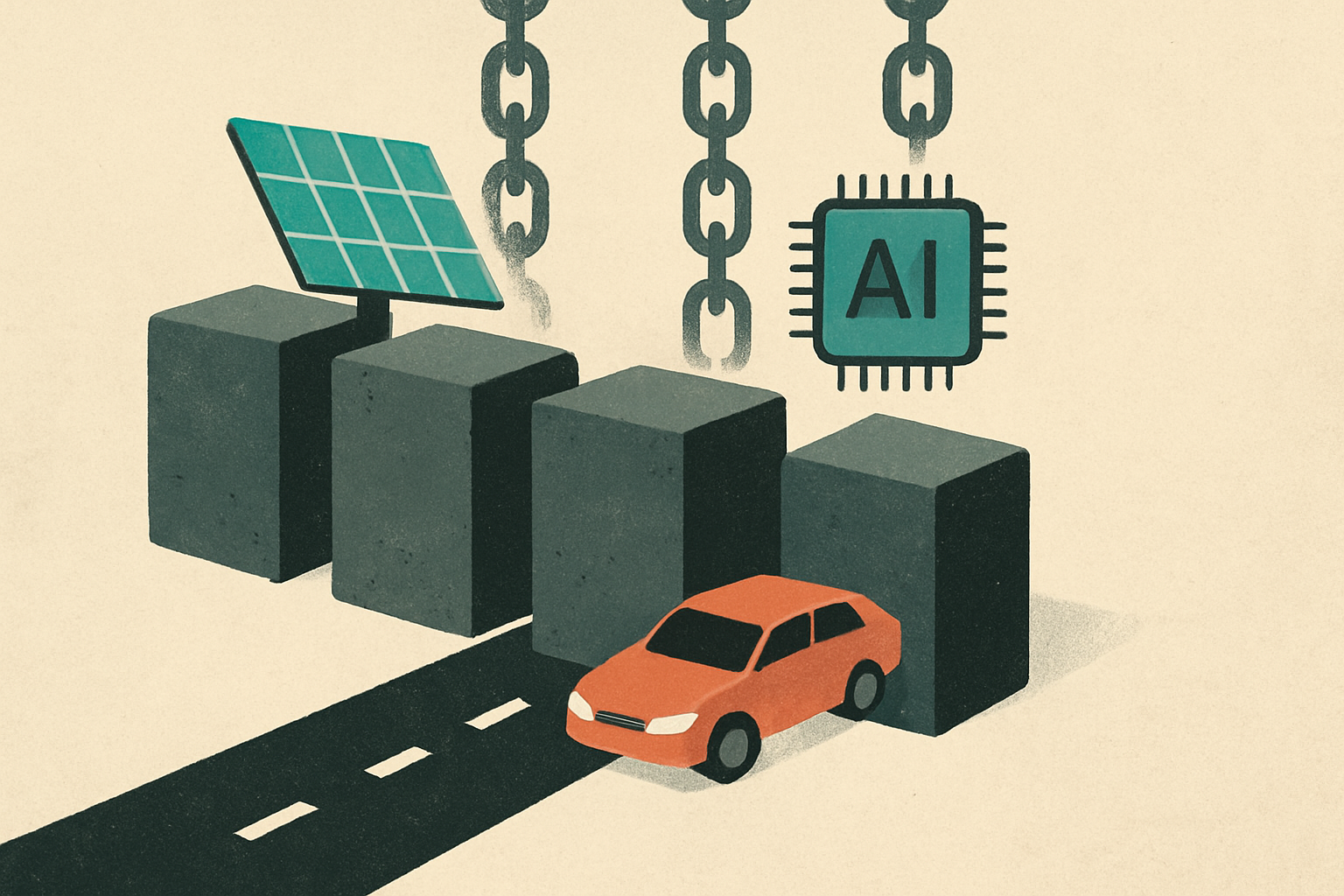
These three sectors demonstrate a common theme: ambitious growth plans colliding with physical infrastructure limitations. Whether building AI chips, solar panels, or vehicles, companies are discovering that scaling production requires more than capital and demand—it needs the underlying industrial ecosystems to support it. The bottlenecks appear in different forms but all trace back to fundamental dependencies in materials, manufacturing capacity, and specialized expertise.
Sources · 3
Hyundai Motor reports 21% drop in Q2 profit, misses forecasts - Reuters
Reuters Business
AMD expected to launch next generation of AI infrastructure to challenge Nvidia - Reuters
Reuters Business
India's solar push idles factories unable to shake reliance on China - Reuters
Reuters Business
Matched signals
Lattice signals Numen pinned to this story at publish time.
Unlock the analytical widgets on every article — signal matches, Trends snapshots, X overlays, agent reasoning — with a Member account.
Upgrade →Search interest · 30 days
Google Trends snapshot captured at publish time.
No Trends signal captured for supply chain bottlenecks. Either the term doesn’t generate enough search volume, or the upstream API was unavailable when this article published.
Unlock the analytical widgets on every article — signal matches, Trends snapshots, X overlays, agent reasoning — with a Member account.
Upgrade →On X right now
Top engagement posts about this topic, ranked by likes + retweets + quotes.
No high-engagement X posts captured for this topic. Either the topic is too quiet or the upstream API was unavailable when this article published.
Unlock the analytical widgets on every article — signal matches, Trends snapshots, X overlays, agent reasoning — with a Member account.
Upgrade →Your read
How did this article land?
Three sliders. Optional comment. Anonymous is fine.
Open to anyone. One response per reader.